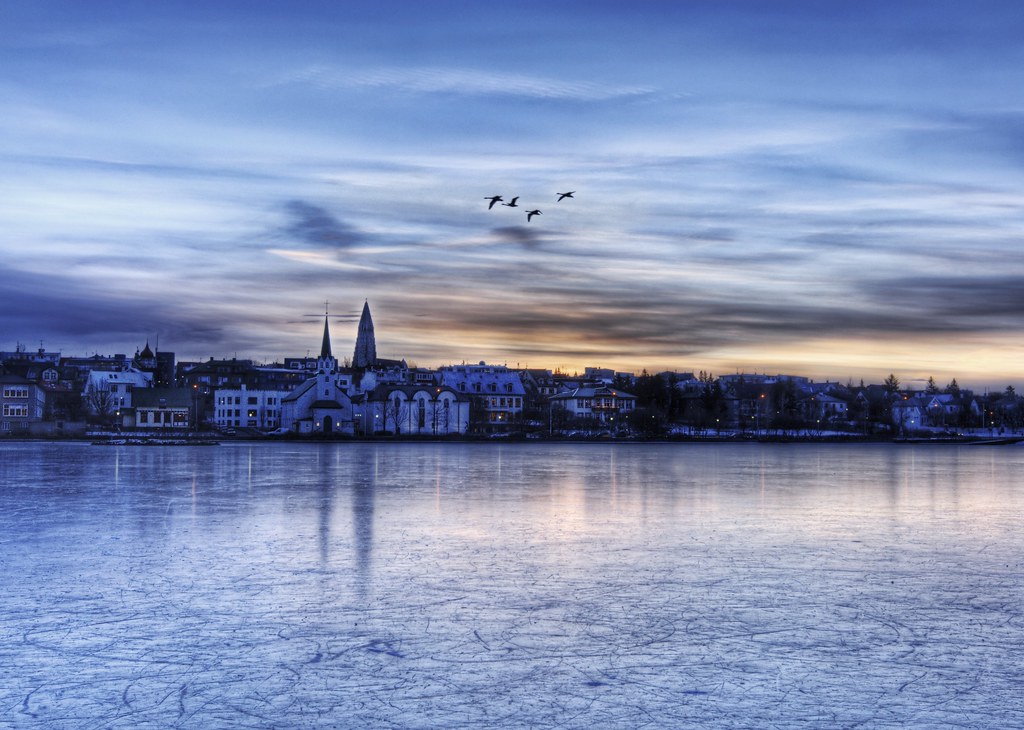
Iceland is one of Europe’s most obvious coolcation destinations – a summer trip here is built around glaciers, waterfalls, geothermal landscapes, black-sand coasts and long daylight rather than high temperatures. It is a natural fit for travellers who want to escape extreme heat without giving up dramatic scenery or a full road-trip experience.
For a first coolcation in Iceland, focus on five areas – Reykjavík, the Golden Circle, the South Coast, Jökulsárlón and Vatnajökull, and Akureyri with North Iceland. These destinations give you the best mix of easy access, iconic landscapes and enough variety for a one- or two-week trip.
Why Iceland works so well for a summer coolcation
Iceland’s summer is defined by light, changeable weather and outdoor travel. From roughly mid-May into July, nights remain very bright, and around midsummer the country experiences its famous near-midnight-sun conditions. That makes it possible to spread sightseeing across a much longer day and avoid doing every stop at the busiest time.
Summer is also the easiest season for most first-time road trips. Major routes are more accessible than in winter, but conditions can still change quickly. Wind, rain, fog and road closures remain part of Iceland travel, so a coolcation here requires flexibility rather than a minute-by-minute schedule.
Quick guide – Iceland’s best coolcation destinations
– Reykjavík – best for a compact city base, food, pools and easy day trips.
– Golden Circle – best for a first look at geothermal landscapes, waterfalls and Icelandic history.
– South Coast – best for waterfalls, black-sand beaches, glaciers and a classic Iceland road trip.
– Jökulsárlón and Vatnajökull – best for glacier scenery, ice, hiking and the strongest coolcation atmosphere.
– Akureyri and North Iceland – best for fewer crowds, whale-watching access, waterfalls and a slower northern route.
1. Reykjavík – the easiest Iceland coolcation base
Reykjavík is small enough to explore without a car and practical enough to use as a base for day trips. Hallgrímskirkja, the harbour, museums, restaurants and public geothermal pools give you plenty to do between longer excursions.
The city works particularly well at the beginning or end of a road trip. Spend one or two nights recovering from your flight, then collect a rental car for the countryside. If you do not want to drive, organised trips can reach the Golden Circle, South Coast and other major sights.
The Blue Lagoon is on the Reykjanes Peninsula rather than in Reykjavík itself. Because volcanic activity in the Reykjanes area has caused temporary closures and access changes in recent years, check official conditions before travelling there instead of assuming access is unchanged.
Best for – first-time visitors, short breaks and travellers who want a comfortable base before exploring the rest of Iceland.
2. Golden Circle – Iceland’s easiest classic route
The Golden Circle links three of Iceland’s best-known attractions – Þingvellir National Park, the Geysir geothermal area and Gullfoss waterfall. It is popular because the route packs geology, history and major scenery into a manageable day from Reykjavík.
At Þingvellir, the landscape is tied to both Iceland’s early parliament and the boundary zone between tectonic plates. At the Geysir area, Strokkur provides the active geothermal spectacle, while Gullfoss gives you one of the country’s most powerful waterfall views.
For a less rushed coolcation, stay overnight in the region rather than treating every Golden Circle stop as a quick photo break. Long summer light means you can visit major attractions earlier or later than the biggest daytime tour groups.
Best for – first-time visitors, short itineraries and travellers who want maximum variety close to Reykjavík.
3. South Coast – waterfalls, black sand and glaciers
Iceland’s South Coast is one of the strongest road-trip sections in the country. The route connects waterfalls, glaciers, black-sand beaches and coastal scenery, with major stops appearing frequently enough that the drive feels like part of the sightseeing.
Seljalandsfoss and Skógafoss are obvious waterfall stops, while the area around Vík adds black-sand coastal scenery. Continue east and the landscape becomes increasingly glacial as you approach Skaftafell, Jökulsárlón and Vatnajökull.
Do not underestimate the Atlantic coast. Waves at exposed black-sand beaches can be dangerous, and warning signs or closures should always override a planned photo stop. Iceland rewards travellers who treat nature conditions seriously.
Best for – road trippers, photographers and first-time visitors who want Iceland’s most concentrated stretch of classic landscapes.
4. Jökulsárlón and Vatnajökull – the ultimate glacier coolcation
If the goal of your holiday is to feel surrounded by ice and cooler landscapes, Jökulsárlón Glacier Lagoon and Vatnajökull National Park should be near the top of the itinerary. Icebergs drift through the lagoon before reaching the nearby coast, while the wider national park protects a huge area shaped by glaciers and volcanic forces.
Nearby Diamond Beach is known for pieces of glacial ice washing onto black sand. Farther west, the Skaftafell area offers hiking routes and access to glacier-related activities. Guided glacier walks should be booked with qualified operators rather than attempted independently.
Traditional blue ice-cave trips are mainly a winter experience, so summer travellers should focus on glacier hikes, lagoon trips, viewpoints and national-park trails instead of expecting the same seasonal activities.
Best for – glacier lovers, photographers and travellers who want the most literal expression of a coolcation.
5. Akureyri and North Iceland – a quieter northern route
Akureyri is the main urban base in North Iceland and a useful alternative to spending an entire trip around Reykjavík and the South Coast. The town is compact, surrounded by mountains and positioned well for exploring the wider north.
Use Akureyri for whale-watching access, local pools and day trips, then continue toward some of North Iceland’s major landscapes. The wider region can include Goðafoss, Lake Mývatn and geothermal areas, depending on how much time you have.
North Iceland suits a second visit particularly well, but it can also be part of a longer Ring Road itinerary. The benefit is space – the journey feels less like a sequence of headline stops and more like a broader road trip.
Best for – repeat visitors, longer itineraries and travellers who want to balance famous southern sights with a quieter region.
How to choose the right Iceland coolcation route
Choose Reykjavík and the Golden Circle for a short three- or four-day trip. Add the South Coast if you have five to seven days. With a full week or more, continue to Jökulsárlón and Vatnajökull. For 10-14 days, consider a larger Ring Road route that brings in North Iceland.
The biggest mistake is trying to drive too far every day. Iceland’s weather, scenic stops and road conditions make journey times unpredictable, so fewer bases and more flexible days usually create a better trip.
Compare Iceland with other Nordic coolcation destinations
Iceland is the strongest choice if glaciers, volcanic landscapes and a dedicated road trip are the main attraction. For fjords, mountains and Arctic coastlines, compare our coolcation Norway guide. For Gothenburg/Göteborg, Baltic islands and Swedish Lapland, see our coolcation Sweden guide. For lakes, sauna, forests and a slower summer trip, read our coolcation Finland guide. You can also return to our coolcation travel guides hub to compare all four destinations.
Iceland coolcation planning tips for 2026
– Pack layers and waterproofs – even in summer, wind and rain can make conditions feel much colder than the temperature suggests.
– Check roads and weather daily – conditions change quickly, especially outside the capital region.
– Book rental cars and key accommodation early – summer is peak travel season and popular areas can fill up.
– Use long daylight strategically – early morning and late evening can be excellent times for major sights.
– Monitor Reykjanes updates – volcanic activity can affect access around Grindavík and the Blue Lagoon even when the rest of Iceland is travelling normally.
FAQ – coolcation Iceland
Is Iceland a good summer coolcation destination?
Yes. Iceland is one of the strongest options in Europe if your priority is dramatic outdoor travel in generally cool, changeable conditions. Glaciers, waterfalls, geothermal areas and the North Atlantic shape almost every itinerary.
What is the best month to visit Iceland in summer?
June, July and August are the main summer months. June has exceptionally long daylight, July is peak season, and August can offer a slightly later-season feel while still supporting most standard summer road trips.
Can you see the Northern Lights in Iceland in summer?
Not during the brightest part of summer because the sky does not become dark enough. If the aurora is the priority, plan for darker months rather than June or July. A summer coolcation is about long daylight, landscapes and road travel instead.
Can Iceland be combined with Norway, Sweden or Finland?
Yes, but Iceland is separated from the Scandinavian mainland by air travel, so it often works better as its own trip. Compare Norway’s best coolcation destinations, Sweden’s best coolcation destinations and Finland’s best coolcation destinations before deciding whether to build a multi-country route.
Iceland’s strongest coolcation advantage is simple – the scenery itself feels cool. Glaciers, ocean wind, waterfalls and long summer light create a trip where escaping heat is not just a weather strategy but part of the experience.
Leave a Reply